
Diwali, also widely known as Deepavali, is one of the grandest, most colorful, and most meaningful celebrations, observed by millions of people around the world. The name “Deepavali” comes from Sanskrit, where “Deepa” means light or lamp, and “Avali” means row. So, literally, Deepavali means a row of lamps. This festival is not just about dazzling fireworks or beautiful visual displays, but a deep symbol of the victory of good over evil, knowledge over ignorance, and light over darkness.
At Lollypop Preschool, we see Diwali as a valuable moment to teach universal values to our students, nurture mutual respect in diversity, and celebrate unity amid rich cultural differences. In this article, we will discuss the history and meaning of Diwali, its traditions, and how Diwali is celebrated at our school.
What Is Diwali? The History and Deep Meaning of the Festival of Lights
Understanding Diwali means tracing the roots of India’s very rich history and mythology. Although it is celebrated by various religions such as Hinduism, Jainism, and Sikhism, the core message of the festival remains consistent: the victory of light over darkness. For Hindus, the main celebration of Diwali is rooted in the epic story of the Ramayana. Diwali commemorates the return of Lord Rama to Ayodhya with his wife, Sita, and his younger brother, Lakshmana, after 14 years of exile and the defeat of the demon king Ravana. The people of Ayodhya welcomed the return of their wise leader by lighting thousands of oil lamps (diya) along the streets. This tradition has been preserved to this day as a symbol of light that guides the way home.
Besides the Ramayana, in South India, Diwali is often associated with Lord Krishna’s victory over the demon Narakasura, which symbolizes the destruction of bad traits within human beings. In the Jain tradition, Diwali marks the moment when Mahavira attained nirvana, or spiritual liberation. For Sikhs, the festival coincides with Bandi Chhor Divas, the day that celebrates the release of Guru Hargobind Ji from Mughal prison. This diversity of historical backgrounds shows that Diwali is celebrated across traditions, with shared respect for human values. The light kindled during Diwali is not only a physical lamp, but also an “inner light” that reminds us to always seek truth and compassion in our daily actions.
Read Also: UN Day: History, Meaning, and Why It Matters for Today’s Students
When Is Diwali 2026? Dates and the Five-Day Celebration Calendar
The date of Diwali changes every year because it follows the Hindu lunar calendar. In 2026, the peak of Diwali (Lakshmi Puja) falls on Sunday, 8 November 2026. The celebration lasts five consecutive days, and each day has its own ritual meaning. (Note: the date of each day may differ by one day depending on calendar calculations and region.)
Day 1: Dhanteras (Friday, 6 November 2026).
This day is dedicated to good fortune and prosperity. Traditionally, people clean their homes thoroughly and buy metal items, especially gold or silver, as a symbol of welcoming the goddess Lakshmi into the home.
Day 2: Naraka Chaturdashi or Choti Diwali (Saturday, 7 November 2026).
This day commemorates the victory over Narakasura. The main ritual is usually an oil bath in the early morning before sunrise to purify oneself.
Day 3: Lakshmi Puja (Sunday, 8 November 2026).
This is the peak of the entire Diwali series. Families gather to pray (puja) to the goddess Lakshmi, the goddess of prosperity, and Lord Ganesha, who is honored as the remover of obstacles and the one who brings good beginnings. The whole house is lit with diya, and the sky is adorned with fireworks.
Day 4: Govardhan Puja (Monday, 9 November 2026).
This day is celebrated to give thanks for the blessings of nature, and is often linked to the story of Lord Krishna lifting Govardhan Hill to protect villagers from a violent rainstorm. Hindus also offer a variety of dishes (Annakut) on this day.
Day 5: Bhai Dooj (Tuesday, 10 November 2026).
Diwali ends with a celebration of the bond between siblings. Sisters pray for their brothers’ safety, and in return, brothers give gifts as a sign of love and protection.
Diwali Traditions: How to Celebrate at Home
Celebrating Diwali at home is about creating a warm, prayerful atmosphere and sharing happiness with family. Preparations usually begin weeks in advance. The first and most fundamental tradition is cleaning the house. It is believed that the goddess Lakshmi only enters a home that is clean and bright, so every corner of the house is cleaned, repainted, or decorated with fresh flowers.
One of the most striking visual aspects is Rangoli, a decorative art made on the floor near the entrance using colorful powder, flower petals, or colored rice. These geometric patterns or nature motifs not only beautify the home, but also serve as a symbol of welcome for guests and deities. Next is lighting the diya, traditional clay lamps filled with oil or ghee and placed on windows, balconies, and doorways. Their soft glow symbolizes the removal of inner darkness. In addition, sharing Mithai, or sweets, is an inseparable tradition. Treats such as Gulab Jamun, Laddu, and Barfi are shared with neighbors and relatives as a symbol of the sweetness of human relationships.
Read Also: 10+ Holiday Activities at Home for Kids — Parents Need to Know!
How We Celebrate Diwali at Sekolah Lentera Kasih & Lollypop Preschool
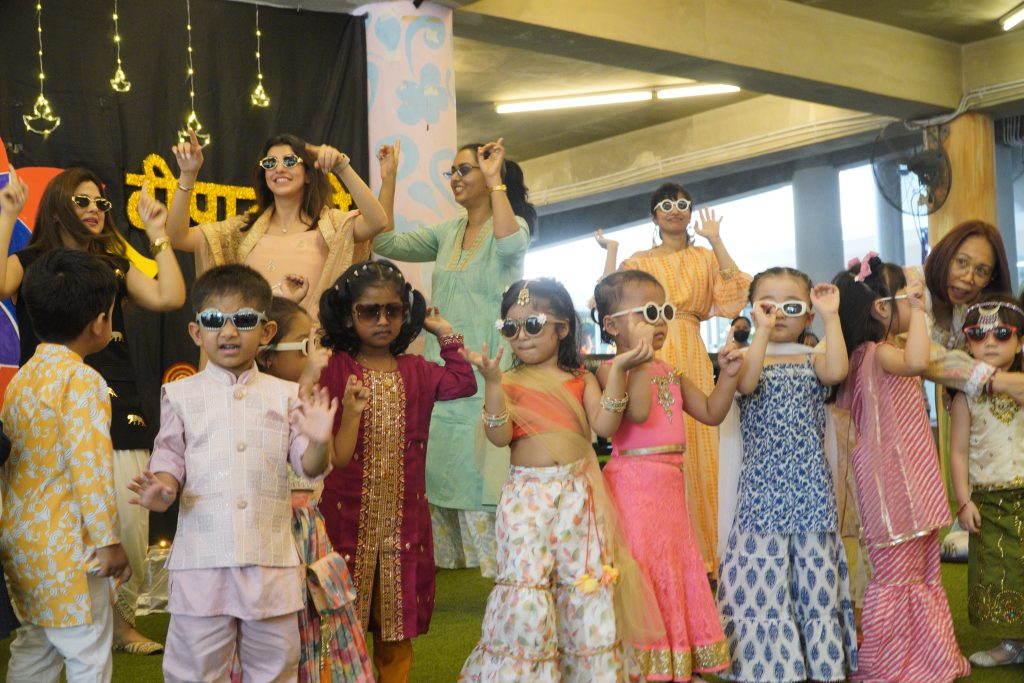
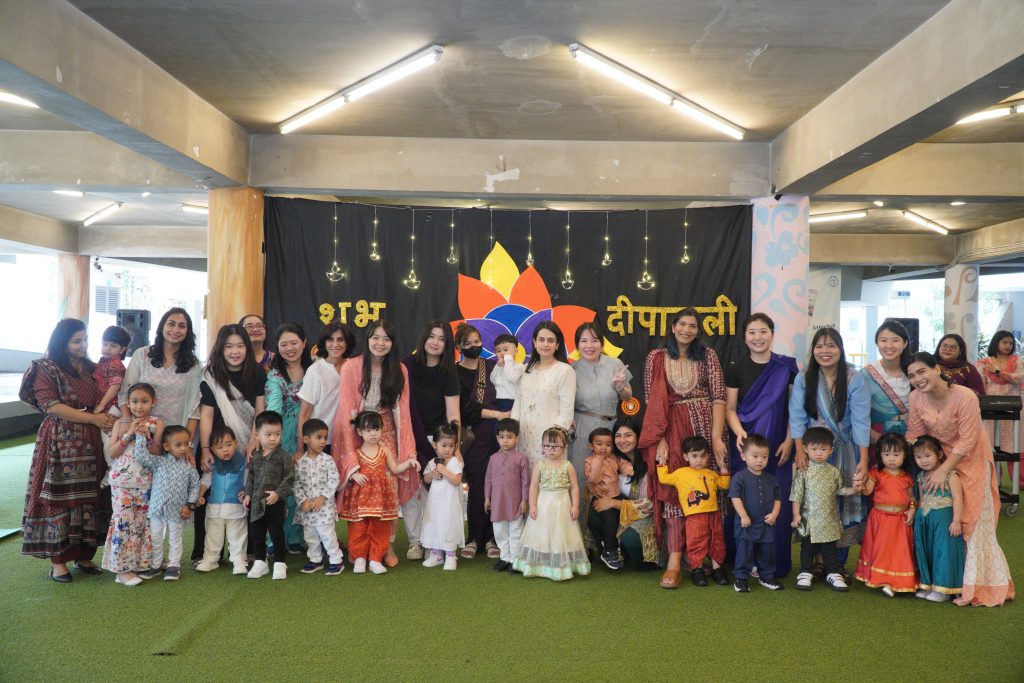
At Sekolah Lentera Kasih (SLK) and Lollypop Preschool, we believe that education does not take place only in textbooks, but also through real cultural experiences. Celebrating Diwali is one of the ways we instill the values of diversity and mutual respect. We want our students to grow into global citizens who are empathetic and who understand the various traditions around them. Diwali celebrations on our campus are always eagerly anticipated by the entire school community, from students and teachers to parents.
Every year, our school is filled with color and interactive educational activities. Lollypop Preschool students, for example, are invited to make paper diya crafts or color simple Rangoli motifs. This is a fun way to introduce art and culture to young children. We also hold storytelling sessions about the history behind Diwali, with moral messages about honesty and courage.
Through this celebration, Lollypop Preschool strives to build bridges of understanding. We want to instill in every child that even though our backgrounds differ, we share the same universal values: the desire to live in light, peace, and harmony. Diwali at our school is not about just one religion or nation, but about celebrating the light of humanity that exists within each of us.
In closing, Diwali is an annual reminder to keep nurturing the light of goodness within ourselves. At Sekolah Lentera Kasih and Lollypop Preschool, we are committed to providing learning experiences rich in cultural values, in order to shape a future generation that is academically bright as well as emotionally and socially rich. Happy Diwali to those who celebrate, and may the light of happiness always shine on our steps.
And for those interested in learning more about Lollypop Preschool and Sekolah Lentera Kasih, contact us today!