
Every child is born with a unique set of abilities that define how they interact with the world, process information, and solve problems. For decades, the standard measure of a child’s potential was the traditional Intelligence Quotient (IQ) test, which focused heavily on logic and linguistic skills. However, at Sekolah Lentera Kasih and Lollypop Preschool, we recognize that intelligence is a far more diverse and vibrant spectrum.
Understanding the different types of intelligence is crucial for parents who wish to support their child’s natural talents and provide a holistic environment for growth. When we move beyond a narrow definition of ‘smartness,’ we open doors to self-confidence and lifelong success for our children. This guide explores the multifaceted nature of human capability, providing parents with the tools to identify and cultivate the specific strengths that make their child unique.
Howard Gardner’s Theory of Multiple Intelligences: A Detailed Overview
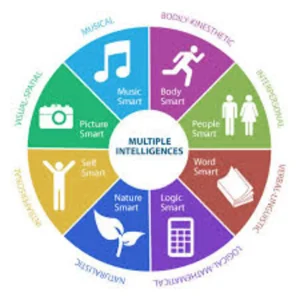
In 1983, developmental psychologist Howard Gardner published his seminal work, ‘Frames of Mind,’ which challenged the long-held belief that intelligence was a single, static entity measurable by a simple test. Gardner proposed that humans possess at least eight or nine distinct intelligences, each representing a different way of processing information and interacting with the environment. This theory was revolutionary because it acknowledged that a student who struggles with multiplication might be a brilliant musician, or a child who finds reading difficult might possess extraordinary social skills. Gardner’s theory shifted the focus from ‘how smart are you?’ to ‘how are you smart?’
Traditional education systems often prioritize linguistic and logical-mathematical abilities, creating a hierarchy that can leave many talented children feeling inadequate. Gardner’s model, however, celebrates diversity. He argued that these intelligences are independent of each other; a person can be highly skilled in one area while being average or even below average in another. For parents, this means that a child’s performance in a standard school setting is only one part of their potential. At Sekolah Lentera Kasih, we integrate these multiple intelligences into our pedagogical approach, ensuring that every student has the opportunity to shine in their own way. Whether it is through art, physical movement, or environmental exploration, Gardner’s theory provides the framework for a truly inclusive education.
Analytical Intelligence
The first two types of intelligence identified by Gardner are those most commonly associated with academic success, Linguistic and Logical-Mathematical.
Linguistic Intelligence
Linguistic Intelligence, often called ‘word smarts,’ involves sensitivity to spoken and written language. Children with high linguistic intelligence have a natural ability to learn languages, use language to achieve goals, and express themselves eloquently. They are often avid readers, enjoy storytelling, and have a deep appreciation for the nuances of grammar and vocabulary.
At Lollypop Preschool, we nurture this intelligence through interactive storytelling, early literacy programs, and activities that encourage children to articulate their thoughts and feelings clearly. Linguistic intelligence is not just about talking; it is about the sophisticated use of words to persuade, inform, and inspire.
Logical-Mathematical Intelligence
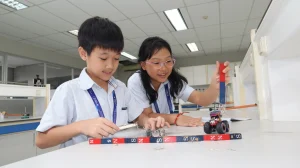
Logical-Mathematical Intelligence, or ‘number smarts,’ refers to the capacity to analyze problems logically, carry out mathematical operations, and investigate issues scientifically. Children who excel in this area are often drawn to patterns, categories, and relationships. They enjoy puzzles, strategy games, and experiments. This intelligence goes beyond basic arithmetic; it involves abstract reasoning and the ability to think conceptually.
In our classrooms at Sekolah Lentera Kasih, we foster logical thinking by encouraging students to ask ‘why’ and ‘how.’ We provide them with challenges that require deductive reasoning and critical thinking, helping them build a foundation for careers in science, engineering, and technology. Both linguistic and logical-mathematical intelligences are essential, but they are only two pieces of a much larger puzzle.
Emotional Intelligence
In recent years, the concept of Emotional Intelligence (EQ) has gained immense recognition as a key predictor of success and happiness. Gardner’s theory accounts for this through Interpersonal and Intrapersonal intelligences.
Interpersonal Intelligence
Interpersonal Intelligence involves the ability to understand and interact effectively with others. It includes sensitivity to moods, temperaments, motivations, and intentions. Children with high interpersonal intelligence are often the ‘peacemakers’ on the playground; they are empathetic, good listeners, and natural leaders. They thrive in group settings and are skilled at navigating complex social dynamics. For parents, fostering this intelligence means teaching empathy, active listening, and conflict-resolution skills, which are core values at Sekolah Lentera Kasih.
Intrapersonal Intelligence
On the other hand, Intrapersonal Intelligence is the capacity to understand oneself. This involves having an effective working model of one’s own feelings, fears, and goals. A child with strong intrapersonal intelligence is self-reflective, aware of their strengths and weaknesses, and capable of self-regulation. They are often independent thinkers who prefer to work alone and have a strong sense of purpose. While interpersonal intelligence focuses on the ‘outer world’ of social relationships, intrapersonal intelligence focuses on the ‘inner world’ of self-awareness. Both are critical for emotional health.
At Lollypop Preschool, we encourage intrapersonal growth by giving children the space to reflect on their choices and express their individual identities, ensuring they grow into resilient and self-assured adults.
Bodily-Kinesthetic Intelligence
Beyond the classroom and social circles, intelligence manifests in how children interact with space and sound. Bodily-Kinesthetic Intelligence involves the use of one’s whole body or parts of the body to solve problems or create products. These children are often highly coordinated, excel in sports or dance, and learn best through movement and touch.
Musical Intelligence
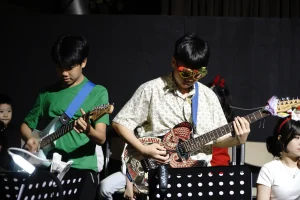
Musical Intelligence, similarly, is the sensitivity to rhythm, pitch, and tone. Musically intelligent children can easily recognize and manipulate sound patterns, making them natural musicians or composers. At Lollypop Preschool & Sekolah Lentera Kasih, we use music and physical activity as fundamental tools for learning, recognizing that for many children, the body and the ear are the primary gateways to understanding the world.
Visual-Spatial Intelligences
Furthermore, Visual-Spatial Intelligence is the ability to perceive the visual world accurately and to perform transformations on those perceptions. Children with this strength are often gifted in drawing, building with blocks, and reading maps. They think in images and can easily visualize objects from different angles. This intelligence is vital for future architects, artists, and engineers. By providing children with building sets, art supplies, and spatial puzzles, parents can help nurture this important cognitive ability. Recognizing these ‘non-traditional’ intelligences ensures that we do not overlook the genius of the athlete, the artist, or the musician.
Naturalist Intelligence
Gardner later added Naturalist Intelligence to his list, which involves the ability to identify and classify patterns in nature. Children with this intelligence are drawn to animals, plants, and environmental systems. They are often the ones who notice the slightest change in the weather or the different species of birds in the garden. In an increasingly urbanized world, fostering a connection to nature is vital for environmental stewardship.
Existential Intelligence
Finally, Existential Intelligence is the capacity to tackle deep questions about human existence, such as the meaning of life or how we got here. While more abstract, children who ask profound philosophical questions are exercising this intelligence. At Sekolah Lentera Kasih, we encourage students to be curious about the natural world and the big questions of life, fostering a sense of wonder and responsibility.
How to Identify and Cultivate Your Unique Intelligence Strengths
Identifying your child’s dominant intelligence requires careful observation and an open mind. Pay attention to what your child does in their free time. Do they gravitate towards books (Linguistic)? Do they spend hours building complex structures (Spatial)? Do they seek out others to play (Interpersonal)? Instead of forcing a child to conform to a specific mold, parents should provide a ‘buffet’ of experiences. Offer them opportunities to try music, sports, logic puzzles, and nature walks. At Lollypop Preschool, we provide this variety, allowing children to discover what resonates with them naturally.
Once a strength is identified, cultivate it by providing resources and encouragement. If your child shows naturalist tendencies, go on hiking trips or start a garden. If they are linguistically gifted, encourage them to write their own stories or join a debate club. However, it is equally important to work on ‘weaker’ areas. The goal of understanding multiple intelligences is not to pigeonhole a child but to use their strengths to help them improve in other areas. For example, a kinesthetic learner might find it easier to learn math through physical manipulatives. By using a child’s natural intelligence as a bridge, we can make learning more engaging and effective. A growth mindset, where effort is praised over innate talent, is the most powerful tool a parent can provide.
Conclusion: Nurturing the Whole Child
In conclusion, the ‘types of intelligence’ a child possesses are diverse, dynamic, and deeply personal. By moving beyond the limitations of traditional IQ and embracing theories like those of Howard Gardner, parents can see their children for who they truly are.
At Sekolah Lentera Kasih and Lollypop Preschool, our mission is to provide an environment where every form of intelligence is valued and nurtured. Whether your child is a budding scientist, a future diplomat, a gifted artist, or a compassionate leader, their unique intelligence is a gift to be celebrated. By understanding and cultivating these strengths today, we are preparing them for a bright, multifaceted future where they can contribute their best to the world. Want to know exactly how we do this? Contact us today for more information!