
Watching your little one begin to piece letters together into words is one of the proudest and most heartwarming moments any parent can experience. The ability to read isn’t just an ordinary academic skill — it’s the key that unlocks the gates of world knowledge, a window to imagination, and the primary foundation for a child’s future success. At Sekolah Lentera Kasih & Lollypop Preschool, we deeply understand that every child has their own unique learning rhythm. That’s why a patient, creative, and structured approach is essential — so that learning to read becomes not a burden, but a delightful adventure for your little one.
Teaching children to read at home can feel daunting, especially without a formal education background. But there’s no need to worry. With the right strategies and an understanding of your child’s cognitive developmental stages, you can become their best teacher. This article covers five in-depth children reading tips, from introducing letter sounds all the way to creating a supportive literacy environment at home.
1. Introduce Letters Through Sounds (Phonics Method)
The most crucial first step in any children reading tips guide is to move away from traditional alphabet memorisation and towards phonics. For decades, many of us were taught to memorise letter names (A, B, C, D as “ay”, “bee”, “see”, “dee”). However, modern educational research shows that introducing letter sounds is far more effective for young children.
Phonics focuses on how each letter or letter combination actually sounds. Instead of teaching the letter “B” as “bee”, teach your child that it makes a “buh” sound. Why does this matter? Because when a child sees the word “B-A-L-L”, they won’t get confused trying to string together “bee-ay-el-el”. With phonics, they blend “buh”, “ah”, “luh” — and the process feels far more logical to the ear.
To apply this at home, start with the clearest vowel sounds (a, e, i, o, u). Once your child has a grasp of vowels, introduce consonants with strong, distinct sounds like “b”, “p”, “m”, or “s”. Use body movements or songs to help them remember. For the “s” sound, for example, you can mimic a slithering snake. At Sekolah Lentera Kasih & Lollypop Preschool, we weave in these multisensory elements so children can hear, see, and feel letter sounds all at once.
Read Also: 4 Types of Learning Methods: Which One Fits Your Child?
2. Use Colourful Word Cards and Picture Flashcards
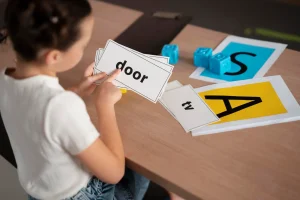
Children are incredibly powerful visual learners. During the preschool years, their brains are rapidly developing in pattern and symbol recognition. This is why using picture flashcards is one of the most highly recommended children reading tips. Visualisation helps children associate abstract symbols (letters) with real objects they already recognise from everyday life.
The best way to use word cards is to make sure the images are clear and engaging. If you want to teach the word “Apple”, use a card with a bold red apple image on one side and “A-P-P-L-E” in a legible font on the other. Ask your child to look at the picture first, say the word aloud, then look at the written form. This process is called orthographic mapping — where the brain begins connecting the shape of a word to its meaning.
Make it interactive too. Spread cards across the floor and ask your child to “jump” to the word you call out. Or have them match word cards to real objects around the house — tape a card that says “TABLE” onto the dining table. This way, learning feels like an exciting treasure hunt rather than a rigid desk exercise.
3. Start with Simple Syllables
Once your child begins recognising letter sounds and their symbols, the next step is teaching them to blend those sounds together. The most effective children reading tip at this stage is introducing simple Consonant-Vowel (CV) syllable patterns. Don’t jump straight to long sentences or complex words with clustered consonants.
Begin with the easiest combinations to pronounce — “ma-ma”, “pa-pa”, “ba-ba”, “da-da”. Focus on one consonant at a time until your child is fully confident before moving on. For example, spend a week on syllables beginning with “B” (ba, be, bi, bo, bu). Once they’re comfortable, move on to “C” (ca, ce, ci, co, cu). Repetition is the key to syllable mastery.
When your child can read two matching syllables (like “mama”), challenge them with different but still simple combinations like “me-lon”, “ba-ll”, or “bo-ok”. Avoid words with consonant endings or diphthongs in the early stages, as these require more complex tongue coordination and sound awareness. Celebrate every correctly sounded syllable — it builds confidence and keeps them motivated.
4. Make Time for Daily Read-Alouds
One of the most overlooked yet most impactful children reading tips is the daily read-aloud. Reading storybooks to your child isn’t just bedtime entertainment — it’s an intensive form of language stimulation. Through read-alouds, children absorb sentence structure, intonation, expression, and passively expand their vocabulary in a completely natural way.
Read Also: Find Out Whether an Auditory Learning Style Suits Your Child!
When reading aloud, don’t just race through the text. Use your finger to track each word as you read it. This simple action helps children understand reading direction (left to right, top to bottom) and grasp that the sounds coming from your mouth correspond to the symbols on the page. Choose books with rich illustrations and simple but engaging storylines.
Involve your child actively. Pause occasionally to ask predictive questions like, “What do you think the rabbit will do next?” or “Look — what letter does this character’s name start with?” These light discussions build reading comprehension skills from an early age. At Lollypop Preschool, we always emphasise the importance of teacher-child interaction during storytelling as a way to cultivate a deep and lasting love of literacy.
5. Create a Relaxed Learning Environment — No Pressure
A child’s emotional state has a profound effect on how quickly they absorb new information. The most fundamental of all children reading tips is keeping the learning atmosphere cheerful and stress-free. When children feel pressured, afraid of making mistakes, or forced, their brains shift into a defensive mode that actively closes off cognitive learning. Learning to read must be an experience that builds positive emotional connections between parent and child.
Pay attention to session length. Young children have relatively short attention spans — typically around 10 to 15 minutes. Ten consistent minutes every day will always outperform a one-hour session once a week that ends in tears. If your child starts to fidget, yawn, or lose focus, end the session on a positive note: “You did so well today! We’ll pick this up again tomorrow!”
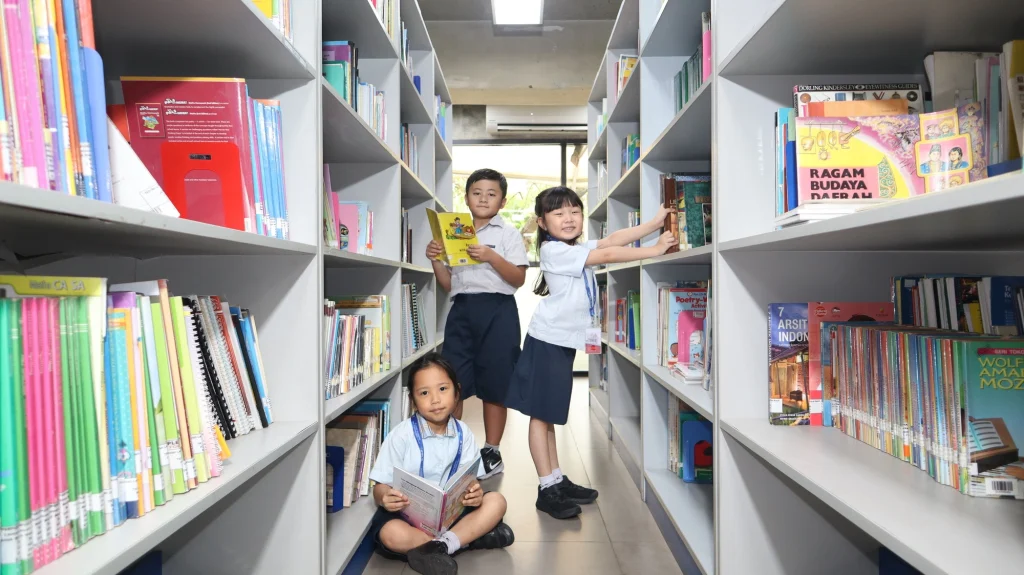
Beyond session length, create a literacy-friendly home environment. Keep a bookshelf at their level, within easy reach of little hands. Let them see you reading too — children are natural imitators, and when they see a parent genuinely enjoying a book, they come to see reading as a worthwhile and enjoyable activity. And never compare your child’s progress to another child’s. Every child has their own season to bloom.
Conclusion: Planting a Love of Reading Early
Teaching children to read is a marathon, not a sprint. It takes extra patience, endless creativity, and genuine warmth at every step of the way. By applying these children reading tips — from a systematic phonics approach, engaging visual materials, gradual syllable introduction, and daily read-alouds, to keeping the emotional atmosphere light and positive — you are giving your child the very best foundation for their future.
Remember: the ultimate goal isn’t just to make your child able to read, but to make them love to read. A love of books will carry them into limitless new horizons.
If you’re looking for an educational environment that nurtures children’s literacy development through proven, caring methods, Sekolah Lentera Kasih & Lollypop Preschool is ready to be your trusted partner in guiding your child to their fullest potential. Contact us to find out more!