

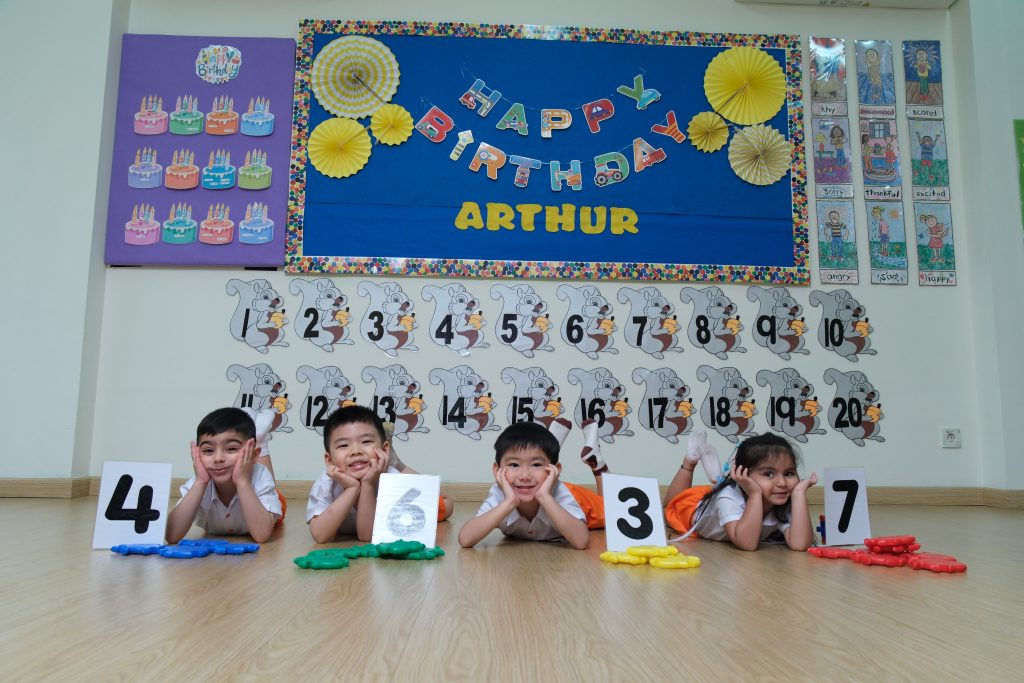
Math is often seen as the scariest subject, and quite a few parents feel anxious themselves when their child starts to struggle. The belief that math is just a pile of complicated formulas that are hard to memorize has long been rooted in society. Yet at Sekolah Lentera Kasih and Lollypop Preschool, we believe learning math is not just about counting numbers, but about building a foundation of logical, critical, and analytical thinking that is useful for life. The good news is that you don’t need to be good at math to help your child. What you need is the right way of supporting them. This guide covers practical steps you can apply at home.
Why Does Math Matter for Children in the Digital Era?
In the digital era, math is the universal language behind almost all modern technology. Here are reasons to support your child from an early age:
- The foundation of technology. Phone apps, search engines, and even artificial intelligence (AI) work on mathematical principles such as linear algebra, probability, and statistics. With a strong foundation, your child can become a creator of technology, not just a user.
- Opens up many careers. Data science, engineering, finance, medicine, and even graphic design require quantitative skills. Architects use geometry, and professional chefs use ratios and proportions.
- Life skills. Analyzing data and making decisions based on logic is an ability that sets apart children who are ready to compete globally.
- Trains mental discipline. Working through difficult problems builds perseverance and attention to detail, and supports the development of the part of the brain that handles planning and decision-making.
So, help your child see that math is a long-term investment in their character and intelligence.
Read Also: In-Demand College Majors: Which Ones Offer the Most Job Opportunities?
Basic Tips for Helping Your Child Learn Math and Understand Faster
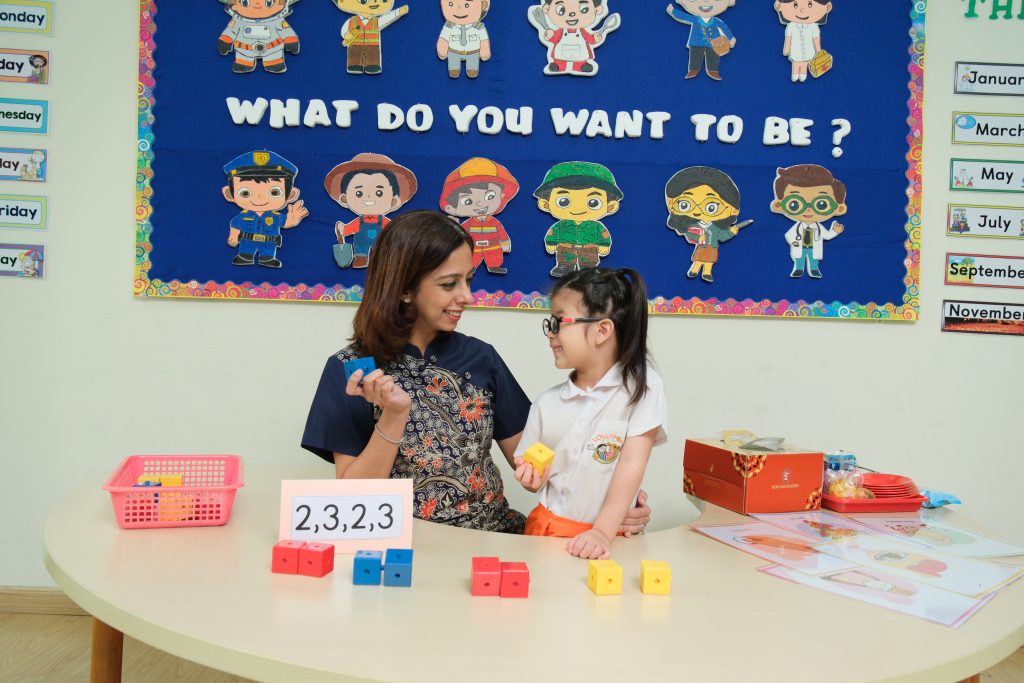
The most common mistake is asking children to memorize formulas without understanding the logic behind them. Memorizing may help for tomorrow morning’s exam, but it fades quickly. Here is what you can do:
1. Make sure the basics are solid
- Check whether your child has mastered basic arithmetic, fractions, and percentages before moving on to harder topics.
- Math is cumulative. If the foundation is shaky, the material built on top of it will feel very heavy.
- For young children, introduce numbers and patterns through real play. At Lollypop Preschool, children understand the meaning of numbers first before learning their written symbols.
2. Help your child visualize problems
- Encourage your child to draw word problems as diagrams, graphs, or with real objects.
- Pictures turn abstract numbers into something the brain can digest easily.
- This approach is known as concrete-pictorial-abstract and has been proven effective.
3. Connect it to everyday life
- Learning volume? Use water containers at home to experiment.
- Learning discounts? Ask your child to calculate prices while shopping.
- Learning measurements? Involve your child when cooking.
4. Get your child in the habit of asking “Why?”
- Encourage your child to question the process, for example “Why is this formula used?” and “Where does it come from?”
- This habit builds stronger and more lasting understanding.
- If you don’t know the answer, find out together. That is also a good example of learning.
Read Also: Discover 5 Learning Mandarin Tips for Kids from SLK & Lollypop
Recommended Online Learning Resources for Children
Learning is no longer limited to textbooks. Here are some options you can use alongside your child:
- Khan Academy: Free, with thousands of videos and interactive exercises from basic level to university. Children can learn at their own pace.
- WolframAlpha: A knowledge engine that solves equations and shows the steps. Good for checking answers and understanding the process.
- Photomath: Children can scan a written problem with a phone camera and see a step-by-step explanation. Make sure your child uses it as a learning aid, not for cheating.
- YouTube: Shows the interesting and beautiful side of math that is rarely taught in class. Great for sparking your child’s curiosity.
How to Help a Child Who Is Afraid of or Struggling with Math
Many children experience Math Anxiety, which is a feeling of panic or tension when facing math tasks. As a parent, you play a big role in overcoming it:
1. Change the mindset at home
- Instill the idea that math ability is not an innate talent, but a skill that can be developed through practice.
- Avoid phrases like “Mom/Dad wasn’t good at math either.” It can make your child feel that giving up is normal.
- Apply a Growth Mindset: every mistake is a chance to learn, not a sign of failure.
2. Create a supportive, pressure-free learning atmosphere
- Help your child feel safe making mistakes, as at Sekolah Lentera Kasih, where teachers are trained to give constructive feedback without judgment.
- Avoid getting angry or comparing your child to siblings or friends.
- Value your child’s effort, not just their grades.
3. Invite your child to relax before studying
- Practice deep breathing together to reduce stress.
4. Help break difficult topics into small parts
- Split the material into simpler steps.
- Finish one small step before moving to the next.
- Celebrate every small success so your child’s confidence grows gradually.
Read Also: Discover How to Boost Your Child’s Learning Motivation! A Complete Guide for Modern Parents
How to Guide Your Child in Practicing Problems
There is a saying: “Mathematics is not a spectator sport.” A child can’t learn math just by watching others solve problems or reading books. They have to dive in themselves. Here is how you can guide them:
1. Practice strategically
- Prioritize quality over sheer quantity of problems.
- Schedule practice every day, even if only for 15-30 minutes.
- Consistency is far more effective than marathon study sessions for hours right before an exam.
2. Sit with your child to review mistakes
- Don’t let your child just look at the answer key and move on to the next problem.
- Encourage them to pause and identify the type of mistake:
- Calculation error
- Concept error
- Misreading the instructions
- By recognizing patterns in their mistakes, children can avoid them in the future.
3. Provide a variety of problems
- Start from the easiest and work up to the most challenging.
- Problem-solving skills improve sharply when children get used to finding solutions from different angles.
4. Be your child’s discussion partner
- Ask your child to explain how they solved a problem to you, even if you already know the answer.
- At Sekolah Lentera Kasih and Lollypop Preschool, students are encouraged to discuss how they solve problems with each other.
- Explaining the steps of logic to someone else is the best way to solidify your own understanding.
Conclusion
Learning math is a journey that takes patience, the right strategy, and a positive supportive environment, especially from parents. By understanding the importance of math in the digital era, helping your child master the basics, making use of technology, overcoming fear, and accompanying consistent practice, your child can master math. Sekolah Lentera Kasih and Lollypop Preschool are committed to supporting every child and their family on this journey, so that children grow up intelligent in logic and ready to face the challenges of the future.
Contact us to learn more about Sekolah Lentera Kasih & Lollypop Preschool!